
CPD Insights
Evidence-based articles on CPD requirements, clinical practice, and continuing education for UK healthcare professionals.

Foot drop: telling L5 radiculopathy from common fibular neuropathy in clinic
Foot drop is a sign, not a diagnosis. Here is how to separate L5 radiculopathy from common fibular (peroneal) neuropathy at the bedside, what the evidence says about hip abduction as a discriminator, which mimics to keep in mind, and when a new foot drop needs an urgent referral.

GLP-1 medicines and musculoskeletal care: what the evidence says about muscle, bone and joints
More patients are taking GLP-1 medicines such as semaglutide and tirzepatide. Here is what current evidence says about muscle, bone and joints, what is known about exercise alongside them, which symptoms deserve a second look in an MSK clinic, and how to stay in scope.

Sleep in persistent pain: screening for insomnia and sleep apnoea, and when to refer for CBT-I
Broken sleep is common in persistent musculoskeletal pain and is linked to worse pain and function. Here's how to screen for insomnia and obstructive sleep apnoea in clinic, what NICE says about referral, why driving matters, and why CBT-I rather than sleep hygiene alone is the first-line treatment.

Bone stress injuries in runners: spotting the high-risk ones early
Focal bone pain that builds with every run can be a bone stress injury, and an early X-ray often looks normal. Here's what the history and examination should pick up, which sites are high risk, why the femoral neck can't wait, when imaging matters, and what to ask about energy availability.

Complex regional pain syndrome: working through the Budapest criteria properly
CRPS is a clinical diagnosis with no confirming scan or blood test, so the examination carries the whole decision. Here is what the Budapest criteria actually require, how the 2021 Valencia consensus says to examine for them, why criterion D is a safety job, when it's too early to call, and what a likely CRPS should change in your plan.

Sacroiliac joint pain: provocation test clusters, not palpation
Palpation and motion tests for the sacroiliac joint have poor reliability and no valid reference for "dysfunction". Clusters of pain provocation tests, read after checking for centralisation, can raise or lower the probability that the SIJ is a pain source. Here is what the evidence supports, what a positive cluster doesn't tell you, and when the question is really an inflammatory one.

Degenerative meniscal tears: exercise first, not routine arthroscopy
Degenerative meniscal tears often sit on an OA spectrum. FIDELITY, METEOR, OMEX, and BASK/EBI guidance support exercise and education first; arthroscopic partial meniscectomy is not superior to sham or exercise for many degenerative presentations. Reserve surgery for locking, repairable acute tears, and failed rehab after shared decision.
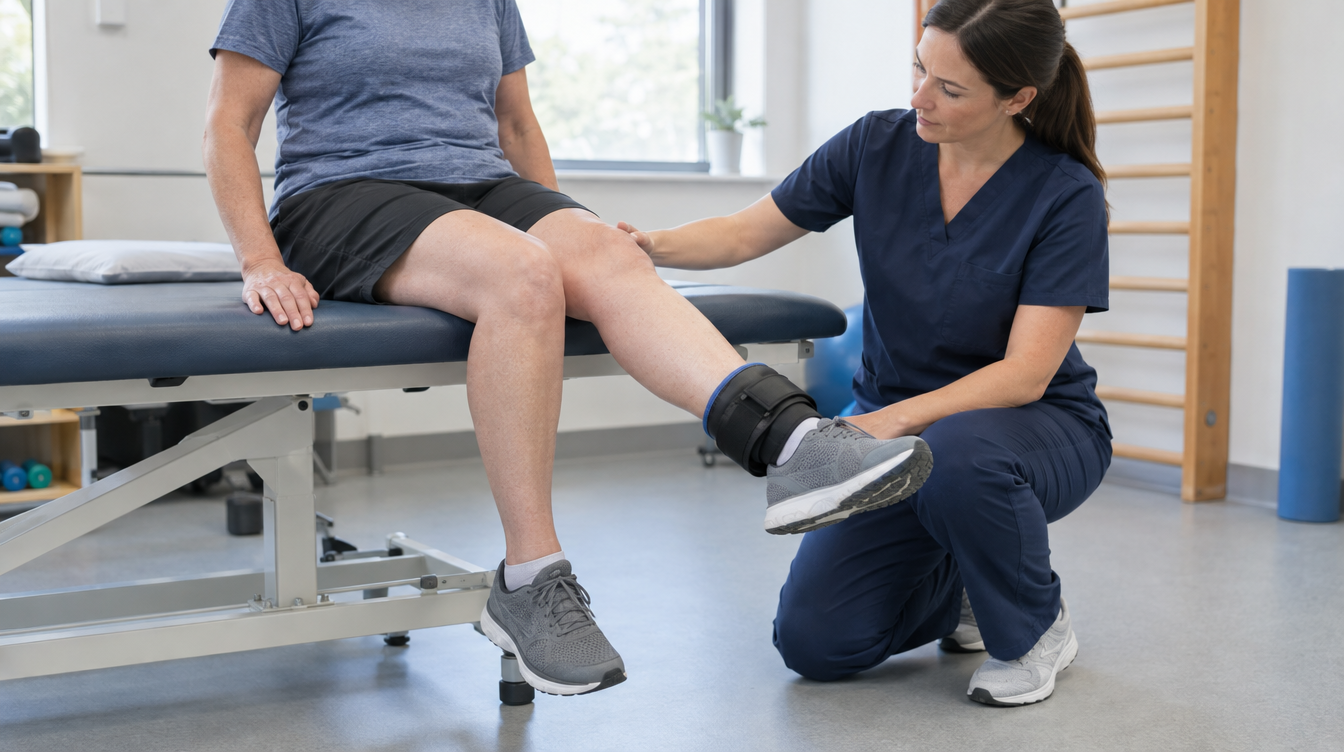
Knee osteoarthritis: why therapeutic exercise still comes first
Knee osteoarthritis care still defaults to imaging and passive modalities. NICE NG226, Cochrane 2024, and OARSI 2019 put therapeutic exercise and education first — with honest caveats on effect size, clear limits on electrotherapy and acupuncture, and practical Monday-morning implications for MSK clinicians.

Posture and pain: the evidence that overturned what clinicians were taught about alignment
A patient walks in holding a printout from a wellness website. It tells them their forward head posture is compressing their spine, accelerating degeneration, and causing their headaches. They want it fixed. They have been told, in confident anatomical language, that their head is too far forward an

Neuroplasticity and persistent pain: what the clinical evidence supports
A patient sits across from you and says, for the third appointment running, that the pain is exactly the same. Same location. Same quality. Same intensity. By any reasonable tissue healing timeline, the original injury has long since resolved. Something else is maintaining this experience — and the

Chiropractic scope of practice: what UK chiropractors can treat, and where the evidence stops
A patient sits down and, before you've asked a single question, tells you their personal trainer said chiropractic would fix their irritable bowel syndrome. You take a breath. You know this moment. Not because it's rare — because it arrives in almost every chiropractor's clinic eventually, wearing a

Shared decision making in chiropractic: the conversation before treatment
A patient sits across from you and says yes before you've finished explaining the options. It feels efficient. It might be anything but. Shared decision making is one of those phrases that has been absorbed into clinical language so thoroughly it risks losing its meaning. In chiropractic practice,

GCC CPD evidence: reflective practice is not the same as attendance
A chiropractor submits their CPD portfolio to the GCC. Twelve certificates. Conferences attended, webinars watched, a spinal biomechanics course completed. The hours add up. The paperwork is in order. And the portfolio says almost nothing about how any of it changed the way that chiropractor works.

Cervicogenic headache or migraine: telling them apart in clinic
A patient sits down and tells you they have headaches. They've probably already been told — by a GP, a neurologist, sometimes just a well-meaning relative — that they have migraines. They may have tried triptans. They may have carried a diagnosis for a decade. Your job, before you touch the cervical

The cost of a weak CPD record when the GCC audits a chiropractor
A chiropractor in the middle of a GCC audit does not suddenly become disorganised. The disorganisation was already there — in the unlabelled folders, the CPD activities logged without reflection, the certificates buried in an email thread from three years ago. The audit simply makes it visible. The

Chiropractic scope of practice what can chiropractors treat evidence-based limit
A patient arrives with a frozen shoulder. They've already seen the GP, done the physio, had the injection. Someone in a local Facebook group said a chiropractor sorted the same problem. They sit across from you expecting a clear answer to a reasonable question: can you help? That moment happens in

GCC CPD evidence standards what counts as reflective practice versus attendance
A chiropractor sits down after a long clinic day and opens their CPD log. They type: 'Attended lumbar radiculopathy webinar. Good refresher.' Two sentences. Box ticked. That entry will satisfy the administrative requirement of recording CPD. It will not satisfy what the GCC actually expects — and th

Does Online CPD Count for HCPC Registered Physiotherapists?
Online CPD fully counts for HCPC registration. What matters is whether it meets the HCPC's four CPD standards — relevance, variety, quality, and benefit to service users. Here is what to look for and how to document it.

What Happens in an HCPC CPD Audit?
If your HCPC renewal triggers a CPD audit, you will be asked to submit your portfolio for assessment. Here is what happens, what assessors look for, and how to prepare a portfolio that passes.

GOsC CPD Requirements for Osteopaths: Complete Guide 2026
The General Osteopathic Council requires all registered osteopaths to complete CPD as a condition of annual registration renewal. This guide covers what GOsC requires, how the CPD year works, and how to build a portfolio that meets the standard.

How Many CPD Hours Do Osteopaths Need in the UK?
UK osteopaths registered with the GOsC must complete 30 CPD hours per year. Here is what counts, what a realistic CPD year looks like, and how to ensure your records meet the GOsC standard.

GCC CPD Portfolio: What Auditors Actually Look For
A GCC CPD audit is not just about the number of hours. Here is what auditors actually assess, what a well-constructed portfolio looks like, and the common mistakes that cause practitioners to fail.

HCPC CPD Requirements for Physiotherapists: Complete Guide 2026
HCPC CPD requirements for physiotherapists focus on quality and variety rather than a fixed number of hours. This guide covers what the HCPC requires, how the renewal audit works, and what a strong CPD portfolio looks like.

Does Online CPD Count for GOsC Registered Osteopaths?
Yes — online CPD fully counts toward your GOsC annual requirement. Here is what the GOsC evaluates, what makes online CPD high quality, and how to document it properly in your portfolio.

What Happens If You Miss the GCC CPD Deadline?
Missing the GCC CPD declaration deadline can result in your registration lapsing. Here is what actually happens, what your options are, and how to avoid this situation.

What Counts as Informal CPD for GCC Registered Chiropractors?
Informal CPD — peer discussion, journal reading, reflective practice — counts toward your GCC 30-hour annual requirement. Here is what qualifies, what documentation you need, and how it compares to formal learning.

GCC CPD Requirements: The Complete Guide for UK Chiropractors (2026)
Everything UK chiropractors need to know about GCC CPD requirements — how many hours are required, what activities count, how to keep records that survive an audit, and how to plan a year that does not end in an August scramble.

How Many CPD Hours Do Chiropractors Need in the UK?
UK chiropractors must complete 30 hours of CPD per year to maintain GCC registration. Here is what that requirement means in practice, what counts toward it, what does not, and how to reach the August 31 deadline without the last-minute scramble.

Does Online CPD Count for GCC Registered Chiropractors?
Yes — online CPD fully counts toward your GCC annual requirement. The more useful question is how to choose online CPD that is genuinely worthwhile and how to document it in a way that holds up in a GCC audit.